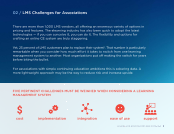
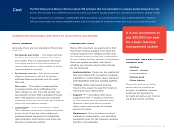
Associations tend to have two competing priorities in selecting an LMS: price and usability. Typically, an association won’t have the benefit of leveraging technical personnel to manage and maintain the system, so it’s vital to find a highly usable platform that’s simple to operate. However, usability comes at a price. Budget-friendly systems tend to have steep learning curves that are non-intuitive and incredibly complex. For example, open source systems are generally priced affordably, and many of these platforms have highly active developer communities, which makes them innovative and low on bugs. However, open source LMSs are also notoriously difficult to use. Even top-rated systems can be difficult to master. The software can be complex and over- whelming, and difficult for new users to learn. Ease of Use Pricier systems are much easier to use — especially in recent years. But these systems are more expensive because they generally come packed with features and capabilities that many associations don’t need and will never use. For example: • Native course creation tools • Tracking for student attendance and participation • Grading and assessment tools • Native communication tools • Gamification mechanics • Retention assessment tools • Scheduling tools • Customized in-depth reporting The challenge for organizations is to find a right-sized LMS that is also highly usable and budget friendly. A GUIDE FOR ASSOCIATIONS AND SOCIETIES 7
Downloaded from Tizra Support Resource Hub (support.tizra.com) by unknown.